Crops

Fields
Your two fields are farmed by the hectare: one grows wheat for the rabbits, the other corn for the poultry. Each hectare goes from sown to growing, then ripe.
Sowing and extending
- Sowing wheat: per hectare; corn: per hectare.
- Fertilising: per sown hectare. Without fertiliser, the sowing does not start growing.
- Extending a field: per hectare.

Irrigation and growth
- Irrigate each farmed hectare with 3 L of fuel. If stock runs short, ripe hectares are served first, then growing ones, fertilised sowings and finally other sowings. Rain irrigates the whole field.
- At the day change, unirrigated hectares die. Fertilised sowings start growing; a sunny day ripens growing crops, including those that have just sprouted.
- Ripe crops can wait several days if they stay irrigated.
- The weather is the same for every farm: each day has a one-in-two chance of being sunny; otherwise it rains or is cloudy.
Harvest
- Choose how many ripe hectares to harvest, within the free room in the silo and the combine harvesters available. A combine harvester harvests 10 ha a day and uses 5 L of fuel per hectare.
- Hectares stay in harvest until the day change: the grain then goes into the silo and the land is freed. Irrigation fuel no longer needed is returned to the tank.
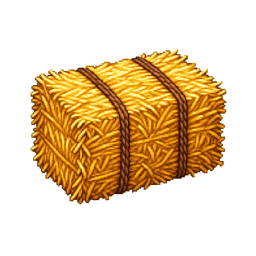
- Wheat: 45 L and 10 bales of straw per hectare.
- Corn: 35 L per hectare.
An extra combine harvester costs .

Vegetable gardens
Carrots and lettuces grow in two separate vegetable gardens, divided into beds. They top up the adult rabbits' ration. Beds go from sown to growing, then ripe, with no fertiliser.
Sowing and extending
- Sowing carrots: per bed; lettuces: per bed.
- Extending a vegetable garden: per bed.
Irrigation and growth
- Irrigate each farmed bed with 2 L of fuel. The most advanced crops are served first. Rain irrigates the whole garden.
- At the day change, unirrigated beds die and sowings start growing. A sunny day ripens growing crops, including those that have just sprouted.
Harvest
- Each ripe bed gives 10 crates, with no combine harvester or fuel. Free room in the cold room limits the harvest.
- Crates arrive at the day change and the beds are then freed. As in the fields, irrigation fuel no longer needed is returned to the tank.
Storage
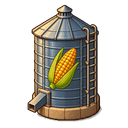
Wheat and corn go into their own silos, fuel into the tanks. Crates of carrots and lettuces share the cold room. These stores do not spoil.
Buying a silo
- 50 L: ; 100 L: .
- 200 L: ; 500 L: .
Tanks and cold room
- 100 L tank: ; 250 L: .
- Cold room: 50 extra places for , or a place.
Using your stores
- A silo holds a single grain. Deliveries fill units in order of purchase; consumption empties the last one filled first.
- Shampoos, treatments and bales of straw are stored without limit and take no room in the Shed.
- The Shed keeps level 1 and 2 items, up to 80 places. Items from the Breeders' Market and the Black Market are delivered there too.
- Shed items stay separate from level 3 stores: a bag of grain does not fill a silo and a crate in the Shed does not fill the cold room.
- A collectible can be placed in the Office for good. This frees a place, but it can no longer be taken out, used or sold. The Office has no limit.